
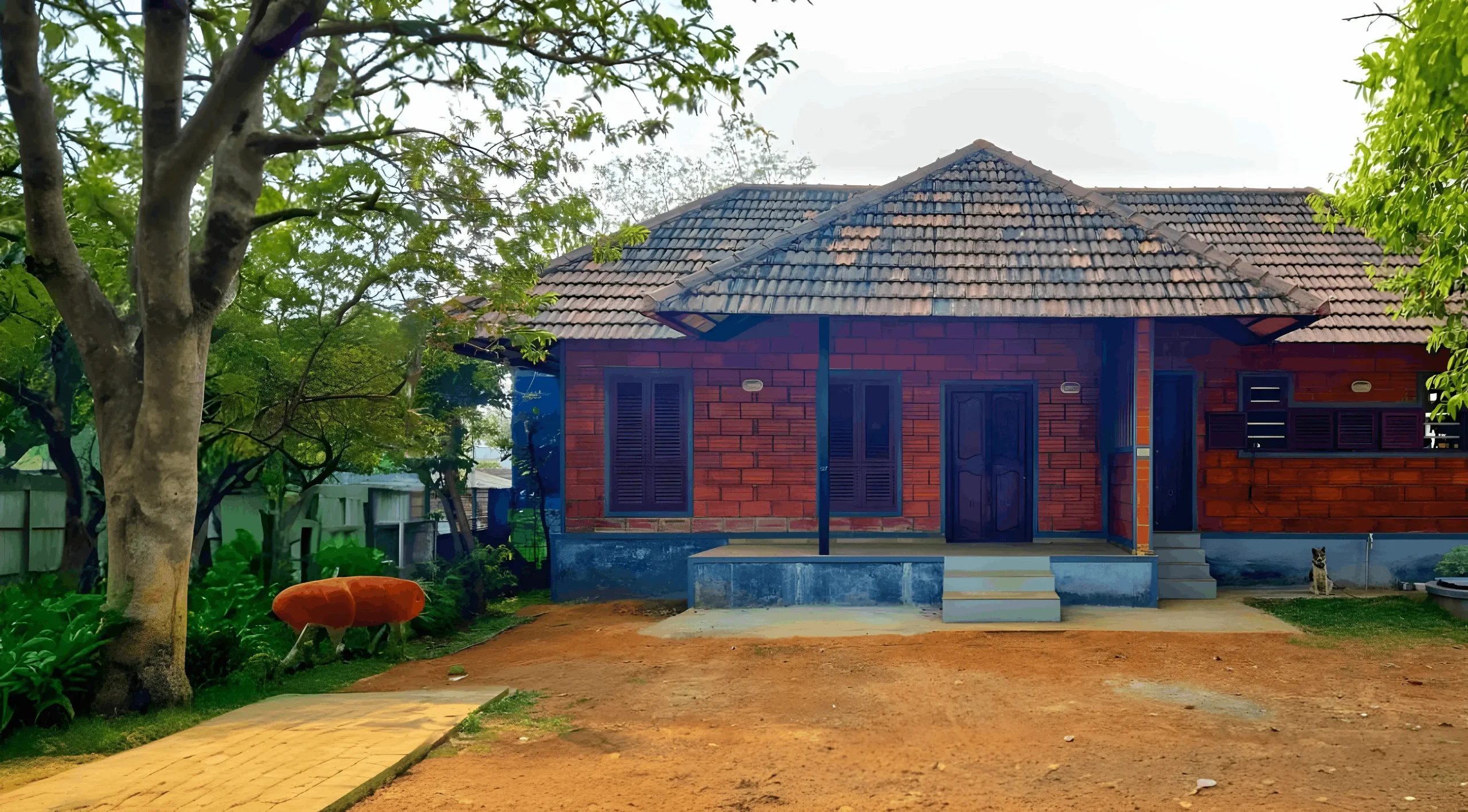
Choosing the right walling material has a major impact on the comfort, durability and overall performance of a building.
Wienerberger Porotherm Bricks are engineered clay hollow bricks designed for modern construction. They combine the natural advantages of clay with a lightweight hollow structure that improves thermal performance and makes construction easier.
For homeowners, architects and builders in Kerala, Wienerberger Porotherm Bricks offer an effective alternative to many conventional walling materials.
What Are Wienerberger Porotherm Bricks?
Wienerberger Porotherm Bricks are precision-engineered hollow clay blocks manufactured by Wienerberger.
Unlike conventional small clay bricks, Porotherm blocks have a larger format with specially designed vertical perforations.
These hollow chambers reduce the weight of the brick while improving thermal insulation.
Wienerberger describes Porotherm as a natural walling material designed to provide thermal insulation, sound insulation, energy efficiency and faster construction.
The bricks are manufactured using natural clay and are suitable for different residential and commercial applications.
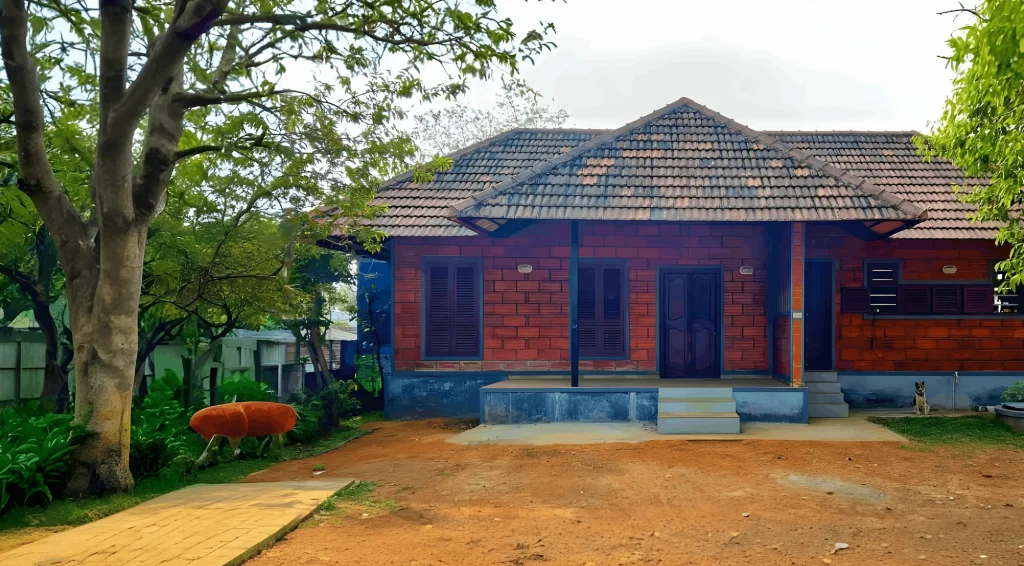
Why Wienerberger Porotherm Bricks Are Suitable for Kerala
Kerala has a predominantly warm and humid climate.
Because walls receive heat throughout the day, the walling material can influence how quickly outdoor heat enters the building.
One of the major advantages of Wienerberger Porotherm Bricks is their thermal performance.
The hollow cells inside the bricks help reduce heat transmission through the wall.
This can create a more comfortable indoor environment compared with many conventional walling materials.
Wienerberger’s published technical data lists a U-value of approximately 1.0 W/m²K for Porotherm HP 200, while the HP 150 is listed at approximately 1.2 W/m²K. Lower U-values indicate lower heat transfer through the wall assembly.
1. Better Thermal Insulation
Thermal comfort is one of the main reasons homeowners consider Wienerberger Porotherm Bricks.
The vertical hollow chambers inside the block create air gaps.
These air pockets slow down heat transfer through the wall.
As a result, rooms can remain more comfortable during hot daytime conditions.
Better wall insulation can also reduce the cooling load on air-conditioned spaces.
Wienerberger states that improved thermal insulation can help reduce energy consumption associated with cooling.
2. Lightweight Wall Construction
Another major advantage of Wienerberger Porotherm Bricks is their low weight.
The hollow design makes the blocks considerably lighter than many conventional walling materials.
For example, Wienerberger lists the weight of a Porotherm HP 200 block at approximately 11.1 kg for a 400 × 200 × 200 mm unit.
Lighter walls can reduce the dead load transferred to the structural frame.
They also make bricks easier for workers to handle during construction.
This can be particularly useful in larger residential and commercial projects.
3. Faster Wall Construction
Porotherm blocks are much larger than conventional small bricks.
This means fewer individual blocks are required to complete the same wall area.
Wienerberger notes that one 8-inch Porotherm block covers approximately the same wall area as several conventional small bricks.
Larger blocks can help improve masonry productivity.
Fewer joints can also reduce mortar consumption during brickwork.
For projects where construction speed is important, Wienerberger Porotherm Bricks can therefore provide a practical advantage.
4. Natural Clay Walling Material
Porotherm is manufactured primarily from natural clay.
Clay has been used as a building material for centuries because of its durability and ability to regulate indoor conditions.
Wienerberger Porotherm Bricks combine this traditional material with modern manufacturing technology.
Wienerberger describes its Porotherm clay blocks as natural and sustainable walling products suitable for modern construction.
This makes them attractive for projects where sustainability is an important design consideration.
5. Good Sound Insulation
Walls are not only responsible for separating spaces.
They also influence how much external and internal noise enters a room.
The hollow structure and mass of Wienerberger Porotherm Bricks help provide sound insulation.
According to Wienerberger’s technical specifications, sound insulation values vary depending on the brick thickness.
For example, Porotherm HP 200 is listed at approximately 44 dB Rw, while HP 150 is listed at around 42 dB Rw.
Actual building performance will also depend on plaster, workmanship, openings and the complete wall system.
6. Fire Resistance
Clay bricks are fired at high temperatures during manufacturing.
Because of this, they are naturally non-combustible.
Wienerberger lists fire resistance of up to 240 minutes for selected 200 mm Porotherm walling products, depending on the product and wall configuration.
Fire-resistant walling materials can contribute to the overall safety strategy of a building.
7. Lower Water Absorption
Moisture performance is especially important in Kerala.
High humidity and heavy monsoon rainfall can expose buildings to significant moisture.
Wienerberger lists water absorption of approximately 15% for several Porotherm HP products.
Proper plastering, waterproofing, detailing and site workmanship are still essential.
However, selecting a suitable walling material is an important first step toward creating durable walls.
Porotherm HP Bricks
Porotherm HP is commonly used as an infill walling solution in framed structures.
Popular sizes include:
| Product | Size |
|---|---|
| Porotherm HP 200 | 400 × 200 × 200 mm |
| Porotherm HP 150 | 400 × 150 × 200 mm |
| Porotherm HP 100 | 400 × 100 × 200 mm |
These dimensions are based on Wienerberger’s current published product information.
Different thicknesses can be selected depending on whether the wall is an external wall or an internal partition.
Porotherm VP Bricks
Wienerberger also offers Porotherm VP bricks.
These vertically perforated clay blocks provide higher compressive strength than the standard HP range.
Wienerberger lists Porotherm VP products with compressive strength around 7 N/mm² and describes them as suitable for selected load-bearing applications up to G+1, subject to proper structural design.
A structural engineer should always confirm whether a particular wall system is appropriate for a load-bearing project.
Porotherm Thermobrick
For projects where thermal performance is a major priority, Wienerberger also offers Porotherm Thermobrick.
The current Porotherm Thermobrick specification lists a U-value of approximately 0.6 W/m²K for the 400 × 200 × 200 mm product.
This makes it an interesting option for buildings designed with greater emphasis on indoor thermal comfort and energy efficiency.
Porotherm vs Conventional Bricks
The decision should not be based only on the purchase price of a single brick.
Wall construction involves several costs.
These include:
- Brick quantity
- Transportation
- Loading and unloading
- Masonry labour
- Cement
- Sand
- Plastering
- Structural requirements
- Construction time
- Long-term cooling requirements
Because Wienerberger Porotherm Bricks are larger and lighter, fewer blocks are normally required for the same wall area compared with traditional small bricks.
The complete wall cost should therefore be calculated rather than simply comparing the price per brick.
Can Porotherm Bricks Be Used Without Plaster?
Porotherm walls may be used in different architectural finishes depending on the product, workmanship and design.
For normal masonry, plastering is commonly used to achieve the desired finished surface and provide additional protection.
Some projects also intentionally use exposed clay masonry as part of the architectural design.
However, exposed construction requires excellent jointing, waterproof detailing and workmanship.
The final approach should be discussed with the architect and Wienerberger-trained application team.
Are Porotherm Bricks Strong?
Yes, when they are used for the application for which they were designed.
For example, Wienerberger lists a compressive strength of ≥3.5 N/mm² for Porotherm HP products.
Porotherm VP products are listed at approximately 7 N/mm².
It is important to remember that brick strength and structural strength are not the same thing.
The complete structural system of the building must be designed by a qualified engineer.
Is Special Masonry Work Required?
The installation process is not complicated, but correct workmanship is important.
Masons should understand:
- Correct block orientation
- Joint thickness
- Cutting methods
- Junction detailing
- Electrical chasing
- Lintel detailing
- Plaster preparation
Training the masonry team before starting the work can improve the quality of the finished wall.
Who Should Consider Wienerberger Porotherm Bricks?
Wienerberger Porotherm Bricks can be considered for:
Residential houses, villas, apartments, commercial buildings, educational buildings and other projects where lightweight walls and improved thermal performance are desired.
They are particularly suitable for customers looking beyond the initial brick price and considering the complete performance of the building.
Wienerberger Porotherm Bricks in Thrissur and Palakkad
If you are planning construction in Kerala, choosing the right Porotherm model and quantity is important.
Bose Traders / Bose Green Building Solutions supplies Wienerberger Porotherm walling solutions for projects in Thrissur, Palakkad and surrounding locations.
Customers can get assistance with product selection, approximate quantity calculation and suitable brick thickness based on the project.
Visit Bose Traders to learn more about our building material solutions.
You can also explore the official Wienerberger Porotherm product information for detailed technical specifications.
Frequently Asked Questions About Wienerberger Porotherm Bricks
Are Wienerberger Porotherm Bricks good for Kerala?
Yes. Their hollow clay structure provides good thermal insulation, making them especially relevant for Kerala’s warm climate.
Proper wall detailing, plastering and waterproofing should still be followed.
Are Porotherm bricks lighter than conventional blocks?
Yes.
Wienerberger states that Porotherm walling products are significantly lighter than many conventional walling materials.
Do Porotherm bricks reduce construction time?
Their larger dimensions mean fewer blocks are required to construct a wall.
This can improve masonry productivity and reduce the number of joints.
Which Porotherm size is suitable for external walls?
Porotherm HP 200 and HP 150 are commonly considered depending on the building design.
The correct thickness should be selected with the architect or engineer.
Where can I buy Wienerberger Porotherm Bricks in Kerala?
Bose Traders supplies Wienerberger Porotherm walling solutions in Thrissur, Palakkad and nearby areas.
Visit bosetraders.com for product enquiries.
Build Better Walls With Porotherm
A good building starts with a good walling system.
Wienerberger Porotherm Bricks combine natural clay, modern engineering, lightweight construction and thermal performance in one walling solution.
For Kerala homes, where heat, humidity and long-term indoor comfort are important considerations, Porotherm provides a strong alternative to conventional walling materials.
If you are planning a new home or commercial project, contact Bose Traders / Bose Green Building Solutions for guidance on Wienerberger Porotherm Bricks, quantity requirements and suitable wall thickness.